
OpenAI Announces Major Workforce Expansion: Doubling Staff to 8,000 by 2026
The artificial intelligence landscape is poised for another seismic shift as OpenAI, one of the sector’s most prominent players, prepares for a dramatic scaling of its human capital. Recent reports indicate the company intends to nearly double its current workforce, aiming to reach approximately 8,000 employees by the conclusion of 2026. This ambitious hiring initiative underscores a period of aggressive growth and signals the company’s unwavering confidence in its commercial future and technological roadmap.
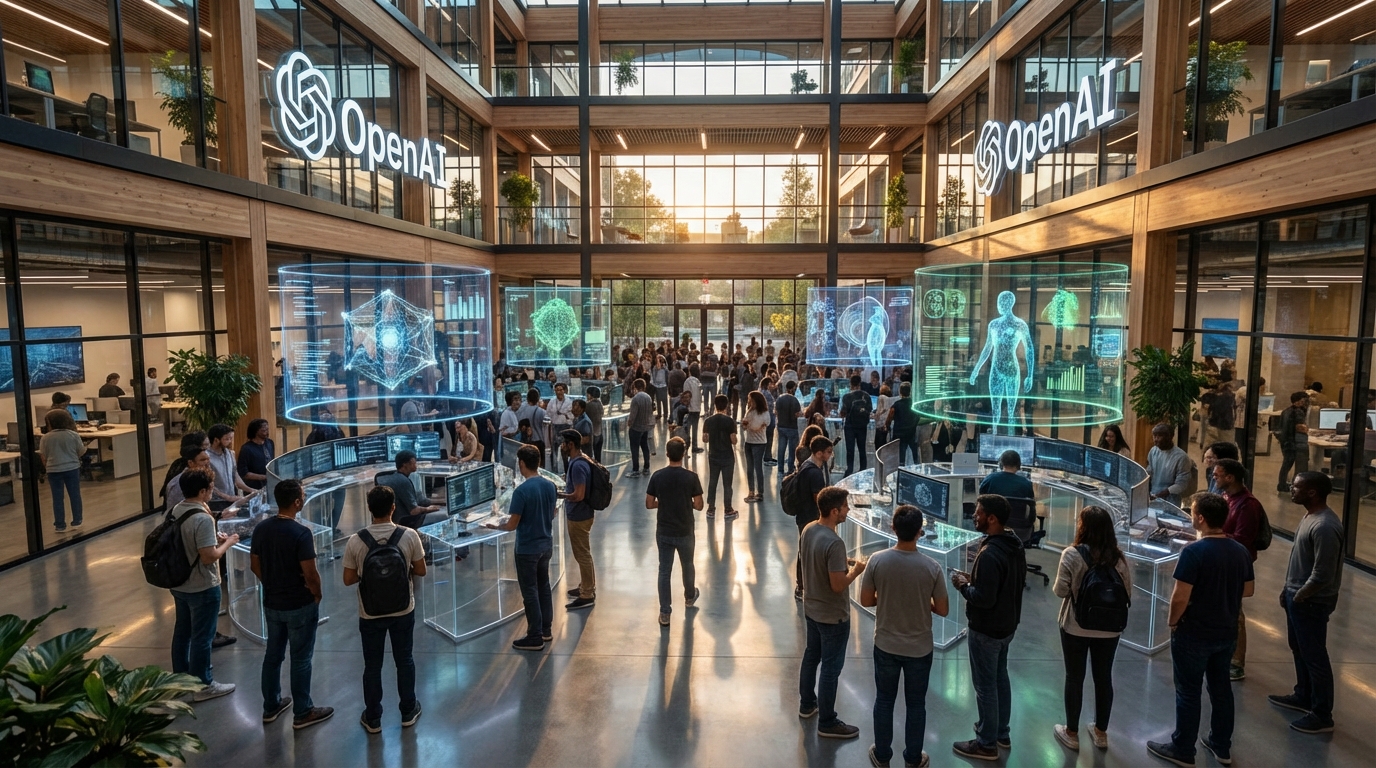
A Strategic Surge in Human Capital
This planned expansion represents one of the most significant talent acquisitions in the history of the AI industry. Moving from around 4,500 staff members to a target of 8,000 within a few years is a clear statement of intent. It reflects a strategic decision to bolster every facet of the organization, ensuring it has the intellectual firepower to maintain its position at the cutting edge of AI development and deployment.
The growth is not confined to a single department. OpenAI’s blueprint calls for strengthening across the board—from core research scientists and software engineers developing next-generation models to the crucial teams focused on AI safety, alignment, and policy. This holistic approach highlights the company’s recognition that building advanced AI requires parallel advancements in technical capability and responsible governance.
Fueling the AGI Mission
At the heart of this expansion lies OpenAI’s foundational mission: the safe development of Artificial General Intelligence (AGI). CEO Sam Altman has frequently articulated the immense scale of resources—both computational and human—required to responsibly pursue this goal. Doubling the workforce is a direct response to that challenge.
Developing frontier AI models involves colossal undertakings in data curation, model training, iterative testing, and product integration. Each phase demands specialized expertise. By significantly expanding its team, OpenAI aims to accelerate its research cycles, enhance the robustness and safety of its systems, and more effectively translate breakthroughs into practical applications for businesses and consumers alike.
The Backdrop of Unprecedented Growth and Investment
This hiring spree does not occur in a vacuum. It follows a period of remarkable financial momentum for OpenAI. The company recently secured a monumental funding round, reportedly valued at $40 billion and led by investment giant SoftBank, which placed OpenAI’s valuation at an astonishing $300 billion. This war chest provides the financial runway necessary to attract top global talent and support a vastly larger organization.
Furthermore, OpenAI has been rapidly diversifying its product portfolio. Beyond its flagship ChatGPT and the underlying GPT models, the company has launched enterprise-grade solutions, developer APIs, and multimedia AI tools like Sora. Managing this expanding suite of products and services, while continuing pioneering research, necessitates a substantial and skilled workforce.
An Industry-Wide Talent Race
OpenAI’s announcement amplifies an already intense competition for AI expertise across the globe. The industry is witnessing a historic scramble for researchers, engineers, and ethicists. Rivals like Google’s DeepMind, Anthropic, and Meta’s AI division are also engaged in significant scaling efforts, each vying to lead the next wave of innovation.
This talent war extends beyond traditional Silicon Valley powerhouses. The report notes increasing competitive pressure from Chinese AI firms, such as DeepSeek, which have demonstrated the ability to create powerful models with notable efficiency. Additionally, the vibrant open-source AI community continues to produce compelling alternatives, pushing commercial entities to innovate faster and more effectively. In this hyper-competitive environment, securing a deep bench of talent is a critical strategic advantage.
Building the Physical Foundations: From Data Centers to Stargate
Human expertise must be matched by unprecedented computational infrastructure. OpenAI’s growth strategy explicitly includes massive investments in the physical backbone required to train and run advanced AI. The company’s ambitions extend far beyond office space and into the realm of supercomputing-scale data centers.
The most eye-catching element of this infrastructure push is the so-called “Stargate” initiative. This reported project, envisioned as a partnership with SoftBank, Oracle, and other technology leaders, outlines plans for an investment of up to $500 billion in AI infrastructure within the United States over a four-year period. While details remain scarce, the scale of the ambition highlights the resource-intensive nature of the AI arms race. Doubling the workforce is intrinsically linked to designing, managing, and utilizing these vast new computational resources.
Implications for the AI Ecosystem
OpenAI’s planned expansion will send ripples throughout the global technology ecosystem. First, it will intensify the competition for a limited pool of specialized AI professionals, potentially driving up compensation and drawing talent from academia and other industries. Second, it solidifies OpenAI’s transition from a research-focused startup to a large-scale commercial and technological institution with complex operational needs.
Finally, this move reaffirms the central role of large, well-funded organizations in the current phase of AI development. The combination of elite talent, massive datasets, and extraordinary computing power creates a high barrier to entry for new competitors, shaping the future structure of the entire industry.
Navigating the Future at Scale
As OpenAI embarks on this journey to double its team, it will face significant organizational challenges. Integrating thousands of new employees while maintaining a cohesive culture and a sharp focus on its safety-centric mission will be a formidable task. The company must also navigate increasing regulatory scrutiny and public discourse around the societal impact of powerful AI systems.
Nevertheless, this workforce expansion stands as a bold declaration. It signals OpenAI’s commitment to being a dominant, long-term leader in shaping the future of artificial intelligence. The coming years will reveal how effectively the company can scale its human potential alongside its technological ambitions, ultimately determining its role in bringing about the next era of AI.
