
U.S. Military Formally Integrates AI Targeting Platform into Core Infrastructure
A significant shift in defense technology strategy is underway as the United States Department of Defense moves to formally institutionalize an artificial intelligence targeting platform across all military branches. According to internal communications from senior defense officials, the Pentagon has designated Palantir Technologies’ Maven Smart System as an official program of record, a status that guarantees long-term budgetary support and mandates integration into standard operational frameworks. This decision represents a watershed moment in the military’s embrace of artificial intelligence for combat and intelligence applications, fundamentally altering how the U.S. armed forces will process information and engage threats in future conflicts.
From Prototype to Permanent Fixture: The Program of Record Designation
The transition of the Maven system from an advanced capability to a formally recognized military program carries substantial operational and financial implications. A program of record designation within the Department of Defense signifies that a technology has moved beyond experimental testing and pilot projects to become a sustained, funded component of the military’s core arsenal. This classification unlocks stable, multi-year funding streams directly from the defense budget, insulating the project from the annual appropriations uncertainty that plagues many developmental initiatives. More importantly, it compels all military services—Army, Navy, Air Force, Marine Corps, and Space Force—to adopt and integrate the system into their standard operating procedures, training regimens, and tactical doctrines.
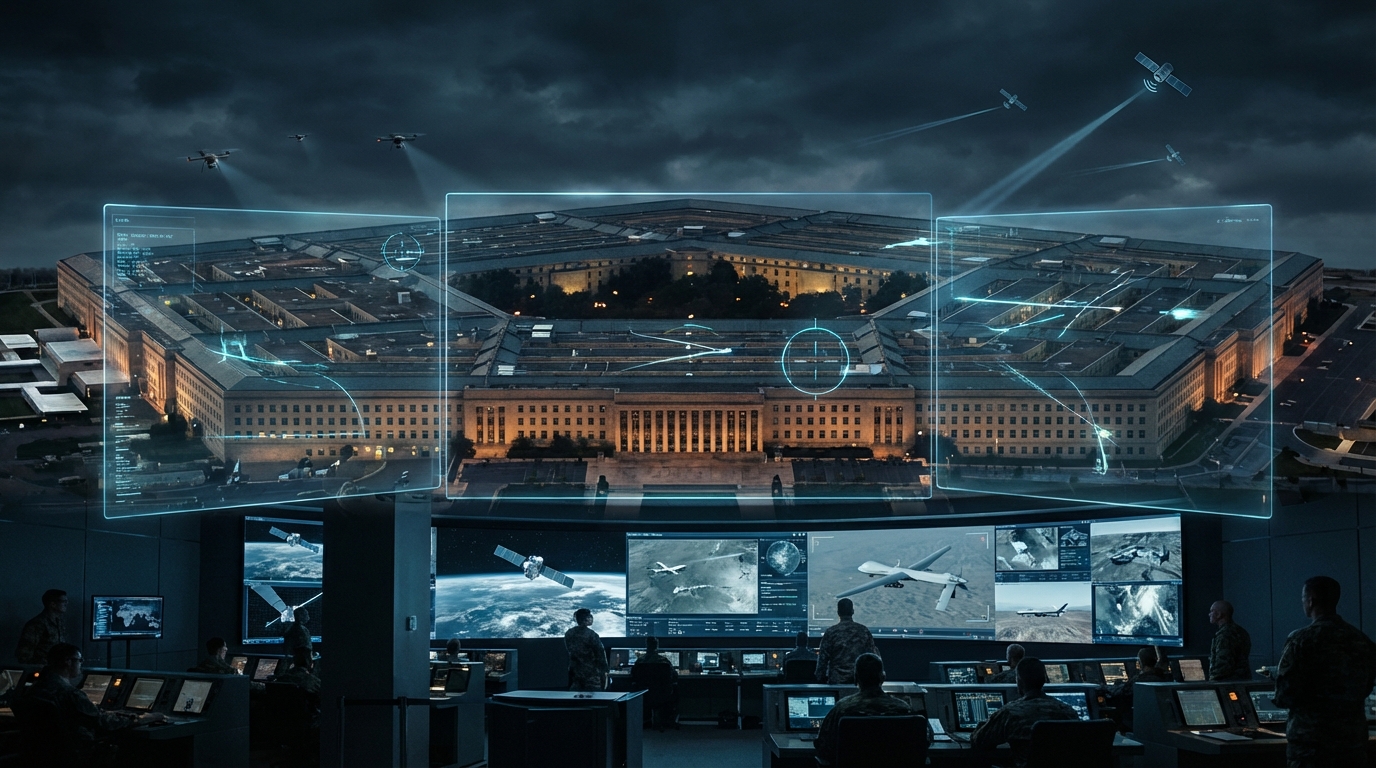
This formal adoption follows an accelerated evaluation period during which the Maven platform was deployed in active combat zones. Defense analysts note that real-world performance data from these deployments heavily influenced the decision to fast-track the system’s institutionalization. The platform’s primary function involves synthesizing vast quantities of surveillance data—including satellite imagery, drone footage, signals intelligence, and ground reports—to identify potential targets and threats with unprecedented speed. By automating the labor-intensive process of sifting through intelligence feeds, the system aims to provide commanders with actionable insights in minutes rather than days, a capability deemed essential for modern high-tempo warfare.
Strategic Context: AI Acceleration and Shifting Defense Priorities
The elevation of Palantir’s system occurs within a broader strategic push to embed artificial intelligence deeply within national security apparatus. Military planners argue that maintaining technological overmatch against near-peer adversaries like China and Russia necessitates leveraging AI for decision advantage. The concept revolves around using machine learning algorithms to process information faster than human analysts possibly could, thereby enabling commanders to make more informed decisions and execute operations before an adversary can effectively respond. This strategic imperative has created a receptive environment for platforms like Maven that promise to deliver tangible operational advantages.
Recent administrative directives within the Pentagon have further cleared the path for specialized AI contractors. Earlier policy shifts involved restricting the use of certain general-purpose AI systems within defense networks, creating specific openings for purpose-built, defense-oriented platforms. Industry observers interpret these moves as part of a concerted effort to cultivate a specialized defense AI industrial base, with companies like Palantir positioned as central architects of the military’s digital infrastructure. The company’s longstanding relationships with intelligence agencies and its focus on handling classified data have made it a preferred partner for sensitive national security applications.
Operational Capabilities and Reported Deployments
The Maven Smart System represents a sophisticated fusion of machine learning, computer vision, and data analytics tailored for military applications. At its core, the platform employs algorithms trained to recognize patterns and objects of military significance within complex visual and signals data. This could include identifying specific vehicle types in satellite imagery, detecting unusual communications patterns, or tracking the movement of personnel across a battlefield. The system does not operate in isolation but is designed to function as a force multiplier for human analysts, presenting synthesized information with confidence metrics to support targeting decisions.
Unconfirmed reports from conflict zones suggest elements of the technology have already been operationally deployed with notable effects. According to defense sources speaking on background, AI-assisted targeting systems have been utilized in recent engagements to process intelligence and coordinate responses against hostile forces. These accounts, while difficult to independently verify, align with the Pentagon’s stated timeline for gradually introducing AI tools into active combat environments. Military officials emphasize that such systems undergo rigorous testing and validation before receiving authorization for operational use, with multiple layers of human verification required before any lethal action is taken.
Ethical Considerations and the Human-in-the-Loop Debate
The formal adoption of AI targeting systems inevitably reignites longstanding ethical debates about automation in warfare. Critics from arms control organizations, academic institutions, and within the defense community itself raise profound questions about accountability, bias, and the appropriate role of artificial intelligence in life-or-death decisions. A primary concern centers on algorithmic bias—the possibility that machine learning models might reflect or amplify prejudices present in their training data, potentially leading to misidentification of targets or disproportionate focus on particular geographic areas or population groups. Without complete transparency into training methodologies and validation processes, external observers cannot fully assess these risks.
Another critical issue involves the chain of accountability when AI systems inform targeting decisions. Legal scholars debate whether existing laws of armed conflict adequately address scenarios where an algorithmic recommendation contributes to a lethal outcome. The defense technology industry and military officials consistently maintain that systems like Maven are decision-support tools rather than autonomous weapons, with human operators retaining final authority over any use of force. This “human-in-the-loop” framework is presented as a crucial safeguard, ensuring that moral judgment and legal review remain integral to the targeting process. However, critics question whether the speed of AI-assisted warfare might create pressure to reduce human oversight to mere rubber-stamping of algorithmic recommendations.
Industry Implications and the Defense AI Marketplace
Palantir’s achievement in securing program of record status for Maven represents a commercial milestone with far-reaching implications for the defense technology sector. The company, founded in 2003 with early backing from intelligence community venture capital, has steadily expanded from data analysis software for counterterrorism to becoming a comprehensive provider of AI infrastructure for national security. This contract solidifies its position as a leading defense AI contractor and establishes a formidable barrier to entry for competitors. The guaranteed funding and mandated adoption across services provide Palantir with a stable revenue base while offering the military a predictable cost structure for maintaining and upgrading the system over its lifecycle.
The decision also signals to the broader technology industry that the Department of Defense is willing to make long-term commitments to specialized AI providers who can navigate the unique requirements of classified environments. This may encourage increased investment in defense-focused AI startups while potentially diverting talent and resources from commercial applications to national security projects. The evolving relationship between Silicon Valley and the Pentagon, historically marked by tension over ethical concerns, enters a new phase as AI becomes increasingly central to military capability.
The Future of AI-Assisted Warfare and International Implications
The institutionalization of the Maven system foreshadows a fundamental transformation in how military operations will be conducted in the coming decades. Defense strategists envision future battlefields where AI systems continuously analyze data from thousands of sensors—satellites, drones, ground vehicles, and individual soldiers—creating a constantly updated, comprehensive picture of the battlespace. Commanders would receive not just raw information but predictive analyses suggesting enemy intentions, identifying vulnerabilities, and recommending optimal courses of action. This vision of “cognitive warfare” places artificial intelligence at the very center of military planning and execution.
Internationally, the U.S. move will likely accelerate similar initiatives among allied and adversarial nations alike. Nations observing the Pentagon’s commitment may feel compelled to develop or acquire comparable capabilities to avoid being strategically outmatched. This dynamic risks triggering an AI arms race, with competing powers investing heavily in military artificial intelligence without corresponding development of international norms or regulatory frameworks. Some arms control advocates have called for preemptive discussions about limiting certain applications of AI in warfare, similar to existing prohibitions on biological or chemical weapons, though such proposals face significant political and technical challenges.
The integration of Palantir’s Maven system as a Department of Defense program of record marks more than just another defense contract award. It represents the crossing of a conceptual Rubicon where artificial intelligence transitions from an auxiliary tool to an embedded component of military infrastructure. As the system rolls out across services over the coming years, its performance, reliability, and ethical implementation will be scrutinized by policymakers, military professionals, and civil society. The outcomes will shape not only the future of American military power but also the global conversation about the appropriate boundaries for artificial intelligence in human conflict. What remains unequivocal is that the era of AI-assisted warfare has moved from theoretical discussion to operational reality.
